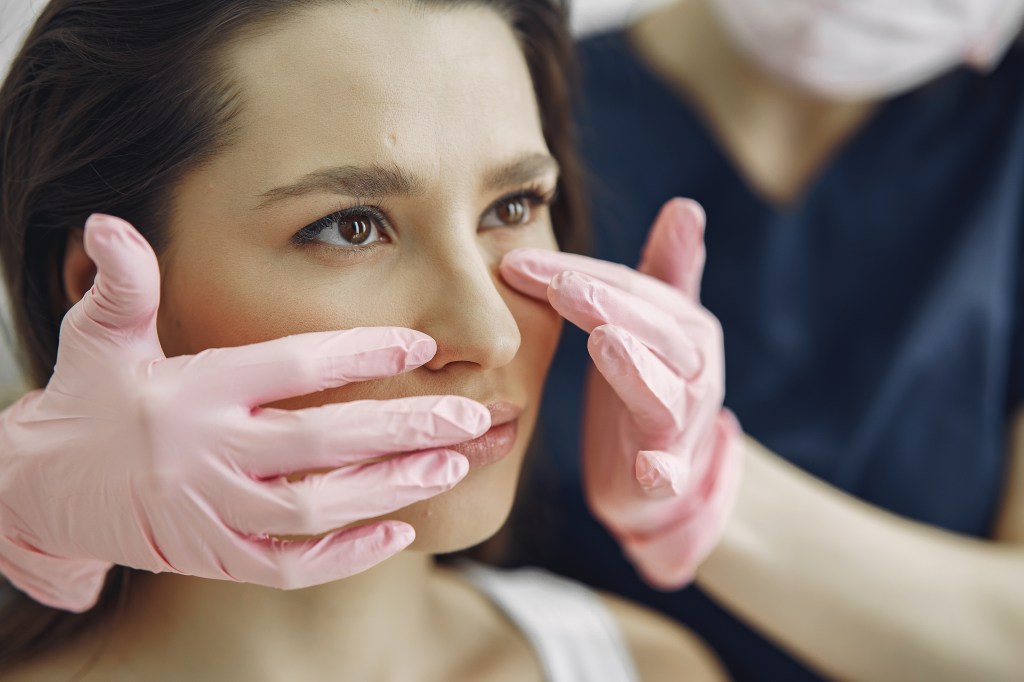
The rhinoplasty recovery timeline can vary from person to person, as individual healing processes differ. However, here is a general timeline that can give you an idea of what to expect during the recovery period:
First Week
- Immediately after surgery, you may experience swelling, bruising, and discomfort.
- A splint or cast will be placed on your nose to protect and support it.
- Nasal congestion and breathing difficulties are common during this time.
- You should rest, avoid strenuous activities, and keep your head elevated to minimize swelling.
Second Week
- Swelling and bruising may start to subside, although some residual swelling will remain.
- The splint or cast is typically removed around this time.
- You may still experience nasal congestion and have difficulty breathing normally.
- Follow your surgeon’s instructions regarding medication, cleaning the incisions, and any dietary restrictions.
Weeks 3-4
- Swelling continues to decrease, and you’ll start noticing more visible changes in the shape and contour of your nose.
- Breathing improves, but it may take a few more weeks to fully return to normal.
- Some patients may feel ready to return to work or social activities, but avoid any strenuous exercises or activities that could potentially impact your nose.
Months 1-3
- By this time, most of the swelling should have subsided, and you’ll have a better idea of the final results.
- Your nose will continue to refine and settle into its new shape.
- Follow-up appointments with your surgeon will help monitor the healing process and address any concerns.
Months 6-12
- The majority of swelling should have resolved, and your nose will continue to mature and refine over time.
- Any residual swelling or minor asymmetries should continue to improve.
- Your final results will become more apparent, but it’s important to note that complete healing can take up to a year or longer.
Remember, these are general guidelines, and individual healing may vary. It’s crucial to follow your surgeon’s post-operative instructions, attend follow-up appointments, and be patient throughout the recovery process.

 2023 Rhinoplasty Guide